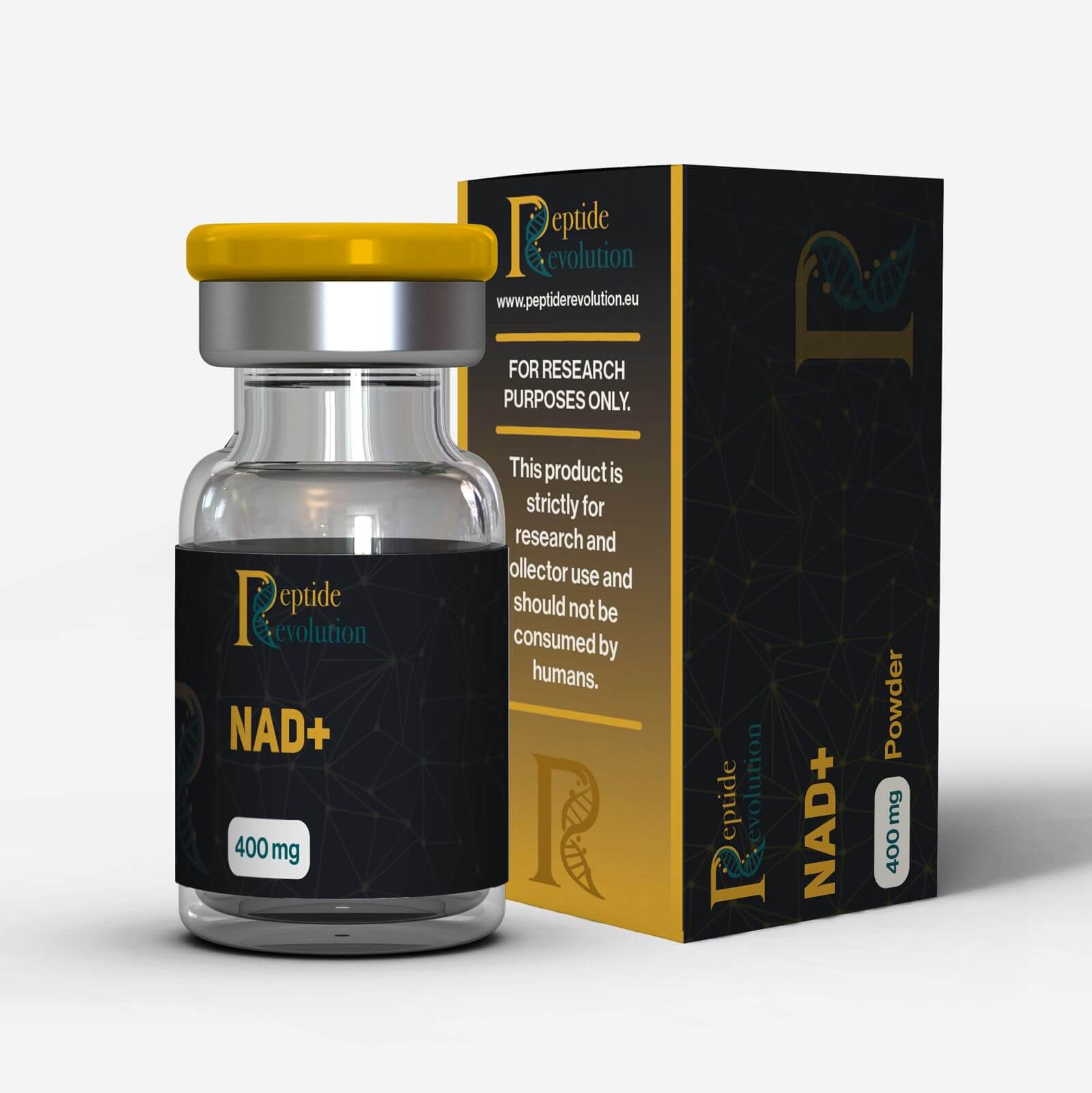
Product Description Research Compound NAD 400 mg Research-grade lyophilized powder supplied in a sterile glass vial. Nicotinamide adenine dinucleotide in its oxidized form, NAD , is widely investigated in controlled laboratory settings for its role in redox balance, mitochondrial function, sirtuin signaling, cellular energy production, and metabolic pathway research. Research Use Only This product is intended strictly for laboratory and scientific investigation. Not for human consumption, therapeutic use, or veterinary application. Specifications Purity High purity; third-party tested (COA/HPLC) Form Lyophilized powder Content 400 mg NAD per vial Packaging Sterile glass vial with secure closure Storage Store at 2–8 °C, protected from light and kept desiccated Molecular Formula C21H27N7O14P2 Molecular Weight 663.43 g·mol⁻¹ IUPAC Name β-nicotinamide adenine dinucleotide (oxidized form) CAS Number 53-84-9 Reconstitution For reconstituting lyophilized research powders, a suitable laboratory solvent such as bacteriostatic water (BAC) is typically used to support consistent handling in research settings. For convenient laboratory use, see Bacteriostatic Water – 10 ml. Research Overview Nicotinamide adenine dinucleotide (NAD ) is a central redox cofactor that cycles between NAD and NADH in dehydrogenase reactions. In experimental systems, it is widely used to investigate mitochondrial respiration, cellular energy production, sirtuin activity, PARP-related pathways, and metabolic stress responses. NAD remains a key tool compound in metabolism, aging, and cellular resilience research. No therapeutic or clinical claims are made or implied. Primary Research Areas Sirtuin Signaling & NAD Metabolism Experimental models exploring NAD turnover, sirtuin activation, and regulation of intracellular NAD /NADH balance. Mitochondrial Function & Energy Pathways Research focused on respiratory chain activity, ATP generation, oxidative metabolism, and overall cellular energy dynamics. Aging, DNA Repair & Cellular Stress Used in studies involving PARP activity, genomic stability, oxidative stress response, and age-related cellular decline mechanisms. Metabolic Efficiency & Recovery Models Applied in research on tissue energy demand, metabolic adaptation, and cellular recovery under high-load or post-stress conditions. Laboratory handling note: Lyophilized research compounds are commonly reconstituted using sterile laboratory diluents such as bacteriostatic water (BAC).